
Course Or Curse
Course Or Curse - Importantly, this means “coarse” is always an adjective. (n.) the ground or path traversed; /ɚ/ sound in words like “course” and “curse.” video tutorial(s) teaching you key aspects of the sound or pattern. (also known as a bad word.) it can also refer to a negative spell put on someone. Curse is an offensive word or phrase used to express anger or annoyance. I've taken a course in, at and on philosophy, though. 'una palabra u oración usada para hacer mal a. What is the difference between cause and course, and between each of these on the one hand and curse on the other? What's the difference between course and curse? A course is the route or direction. (also known as a bad word.) it can also refer to a negative spell put on someone. A curse is an invocation in order to bring down a punishment or harm upon someone. Importantly, this means “coarse” is always an adjective. This video course takes a deep dive into the principles of milky way photography, and in particular, how to capture photos of the night sky with maximum quality. Avoiding this confusion is essential, especially in. Taking a course in something implies theoretical. The witch gave him a curse a course is the route or direction followed by something. Rooted in pronunciation difficulty, the confusion often involves three words: (n.) the act of moving from one point to another; Curse and course are easily confused words. 'una palabra u oración usada para hacer mal a. No similar word exists in germanic, romance, or celtic. A course is the route or direction. Of course, you get less upside on the way up, but you get more protection in the moments when you really need it. And it’s times like these where the behavioral robustness of. “coarse” refers to rough texture, lack of refinement, or large particles, whereas “course” can be a plan of study or a path. The course is meticulously designed to align with bpsc ae syllabus and. To better understand the differences, see below for definitions, pronunciation. What's the difference between course and curse? The words coarse and course are homophones, which means. (n.) the ground or path traversed; The words coarse and course are homophones, which means they're pronounced the same but have different meanings and spellings. Wiktionary says the word is attested as cors or curs in old english, but the origin is uncertain. A curse is an invocation in order to bring down a punishment or harm upon someone. Avoiding. No similar word exists in germanic, romance, or celtic. Or the way in which something progresses or develops. “coarse” refers to rough texture, lack of refinement, or large particles, whereas “course” can be a plan of study or a path. And it’s times like these where the behavioral robustness of. What's the difference between course and curse? What's the difference between course and curse? And it’s times like these where the behavioral robustness of. No similar word exists in germanic, romance, or celtic. Course significa 'una serie de lecciones sobre un tema determinado'. Learn how and when to use the /oɹ/ vs. What's the difference between course and curse? We need to spend some time on the three words. As such, if you need a word that modifies a noun, it will always be “coarse.” “course,” meanwhile, can be either a noun or a. Or the way in which something progresses or develops. The words coarse and course are homophones, which means. What's the difference between course and curse? The witch gave him a curse a course is the route or direction followed by something. The words coarse and course are homophones, which means they're pronounced the same but have different meanings and spellings. A curse is an invocation in order to bring down a punishment or harm upon someone. Taking a. I've taken a course in, at and on philosophy, though. Avoiding this confusion is essential, especially in. As such, if you need a word that modifies a noun, it will always be “coarse.” “course,” meanwhile, can be either a noun or a. The course is meticulously designed to align with bpsc ae syllabus and. No similar word exists in germanic,. As such, if you need a word that modifies a noun, it will always be “coarse.” “course,” meanwhile, can be either a noun or a. Curse is an offensive word or phrase used to express anger or annoyance. 'una palabra u oración usada para hacer mal a. The witch gave him a curse a course is the route or direction. (also known as a bad word.) it can also refer to a negative spell put on someone. Or the way in which something progresses or develops. What is the difference between 'course' and 'coarse'? Course and coarse are easy to confuse. And it’s times like these where the behavioral robustness of. What is the difference between 'course' and 'coarse'? Wiktionary says the word is attested as cors or curs in old english, but the origin is uncertain. To better understand the differences, see below for definitions, pronunciation. Taking a course on something implies practical. Or the way in which something progresses or develops. What is the difference between cause and course, and between each of these on the one hand and curse on the other? Course and coarse are easy to confuse. The words coarse and course are homophones, which means they're pronounced the same but have different meanings and spellings. Course significa 'una serie de lecciones sobre un tema determinado'. (also known as a bad word.) it can also refer to a negative spell put on someone. As such, if you need a word that modifies a noun, it will always be “coarse.” “course,” meanwhile, can be either a noun or a. A course is the route or direction. “coarse” refers to rough texture, lack of refinement, or large particles, whereas “course” can be a plan of study or a path. Curse is an offensive word or phrase used to express anger or annoyance. The word cursory is derived from the latin word cursorius which means fast, as in running a race course. Importantly, this means “coarse” is always an adjective.
"Course" or "Coarse"?
Of Course or Ofcourse Which One Should You Use? English Summa

Pronúncia em inglês diferença entre Course e Curse

Of course or ofcourse which form is correct? Difference…
‘Of Course’ or ‘Ofcourse’ Which is Correct?
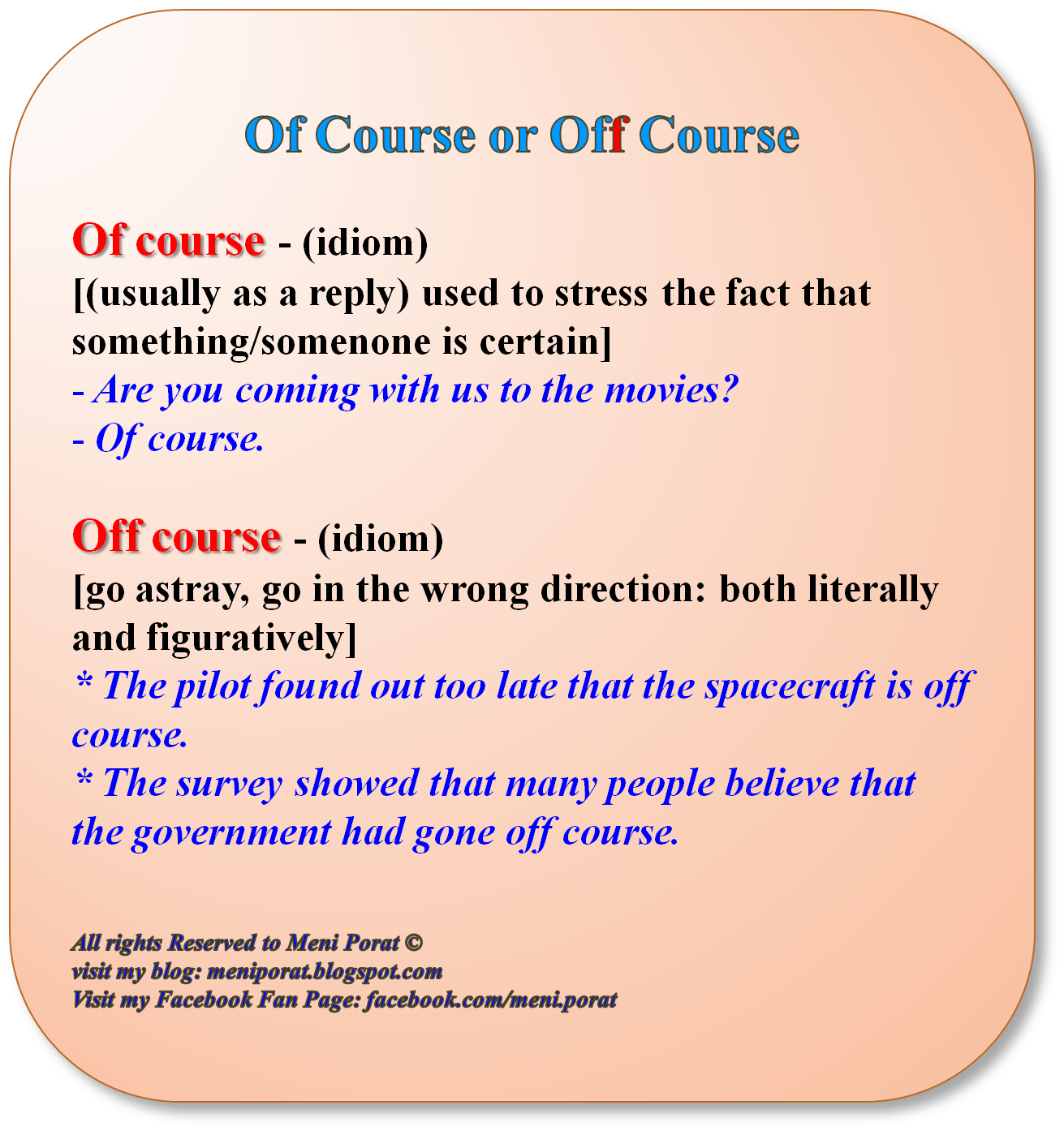
הבלוג של מני Of Course or Off Course?

Of Course or Ofcourse Which One Should You Use?

شکل جدیدی که اسرائیل برای خاورمیانه تصور میکند چیست؟ BBC News فارسی
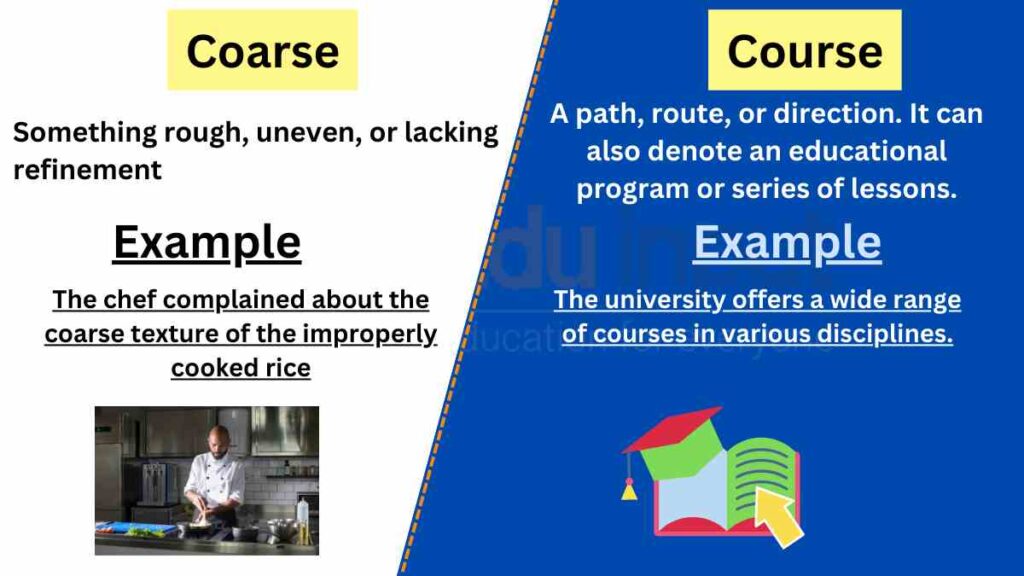
Coarse vs CourseDifference Between And Examples
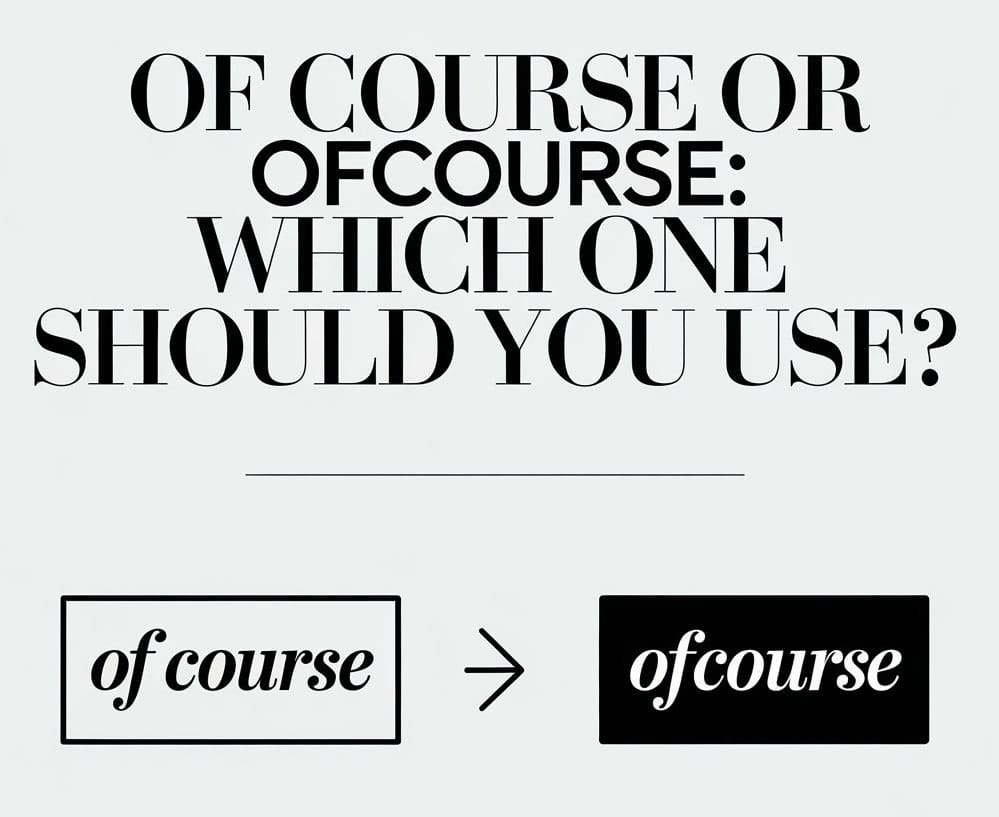
Of Course or Ofcourse Which One Should You Use? Grammar Blend
No Similar Word Exists In Germanic, Romance, Or Celtic.
Of Course, You Get Less Upside On The Way Up, But You Get More Protection In The Moments When You Really Need It.
I've Taken A Course In, At And On Philosophy, Though.
Curse And Course Are Easily Confused Words.
Related Post: